|
Steffen Backmann I'm a Senior Member of Technical Staff at Oracle Labs in Zürich, where I work on LLM agents: building multi-agent applications for real-world use cases, contributing to the open-source frameworks that execute and specify them, and making LLM workloads run safely and efficiently inside the database. My research interests also lie in the behaviour of LLM agents, particularly when objectives, incentives, and moral commitments come into conflict. At ETH Zürich and in collaboration with the Max Planck Institute for Intelligent Systems, I worked with Prof. Zhijing Jin and Prof. Bernhard Schölkopf to study what agents actually do when moral commitments and payoffs pull in opposite directions. I completed my M.Sc. in Computer Science there, focusing on Machine Intelligence and Software Systems. Before ETH, I studied Information Systems at University of Münster. Before university, I completed an apprenticeship in agriculture—which is also where my interest in renewable energy and anything outdoors comes from. |

|
ResearchI'm interested in how LLM agents behave once they are given stakes: how they decide when incentives conflict with norms, how to evaluate that behaviour in a way that actually measures something, and how to build agentic systems that are reliable enough to put in front of users. |
|
When Ethics and Payoffs Diverge: LLM Agents in Morally Charged Social
Dilemmas
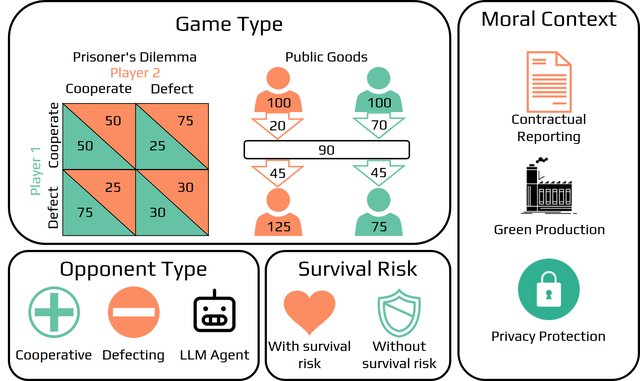
Steffen Backmann, David Guzman Piedrahita, Terry Jingchen Zhang, Emanuel Tewolde, Rada Mihalcea, Bernhard Schölkopf, Zhijing Jin , 2025 paper :: code A benchmark for evaluating the ethical alignment of LLM agents when moral imperatives conflict with profit incentives. It embeds the prisoner's dilemma and public goods game in morally charged contexts, varying moral framing, opponent behaviour and survival pressure across nine models, and estimates each factor's causal effect while analysing motives in agents' reasoning traces. No model remains consistently moral; game structure and moral framing are the strongest drivers, exposing the situational brittleness of current models. |
|
Beyond Binary Selection: Exploring Soft Masking Techniques for Language Model
Explainability
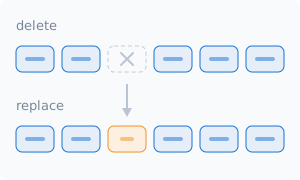
, 2024 report :: code Evaluating a feature-attribution method usually means deleting the tokens it deems unimportant, which pushes the input off-distribution and throws away the nuance in the scores. We instead replace those tokens with plausible substitutes found through Gemma embeddings and faiss similarity search, so an explanation reflects the attribution scores it came from. |
Experience |

|
Oracle Labs,
Zürich
Senior Member of Technical Staff
October 2026 – present
Member of Technical Staff
September 2025 – October 2026
Research Assistant
July 2024 – December 2024
Research on bringing AI capabilities into Oracle Database. Designed and built a multi-agent LLM application that automates financial investigations (patent submitted), and contribute to WayFlow and Agent Spec, Oracle's open-source frameworks for executing and specifying LLM agents. |

|
Porsche AG, Stuttgart
Data Science Intern, Financial Strategy and Data Science Built and deployed a model for automated processing of transaction confirmation PDFs, and prototyped an entity resolution solution matching bolted joints across different production manuals. |

|
Silke & Christian Dohrmann GbR, Steyerberg
Agricultural vocational education (apprenticeship) Worked independently across plant production, machine operation and livestock, and was involved in planning and implementing renewable energy projects (wind, solar, biogas). |
Education |

|
ETH Zürich
M.Sc. Computer Science — GPA 5.6/6 September 2022 – August 2025 Coursework in Probabilistic AI, Machine Perception, Design of Parallel and High-Performance Computing, Interactive Machine Learning, and Reliable and Trustworthy AI. |

|
University of Münster
B.Sc. Information Systems — GPA 1.0 (German scale) / 4.0 (US), rank 1 of 234 October 2019 – August 2022 Coursework in Deep Learning, Operations Research and Optimization, and Data Analysis & Simulation. Spent an exchange term at the University of the Fraser Valley in Abbotsford, Canada. |
Selected ProjectsCourse projects, side projects and unpublished research work. |
|
Instance Segmentation of Trees in Satellite Data
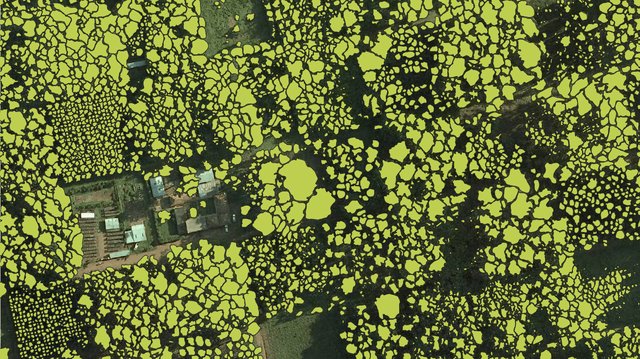
, 2022 code :: thesis A pipeline for instance segmentation of individual trees in Rwandan satellite imagery, comparing Mask R-CNN and Cascade Mask R-CNN in PyTorch and MMDetection, from tiling and annotation handling through to evaluation on held-out regions. |
|
Benchmarking CUDA in Julia vs. CUDA in C
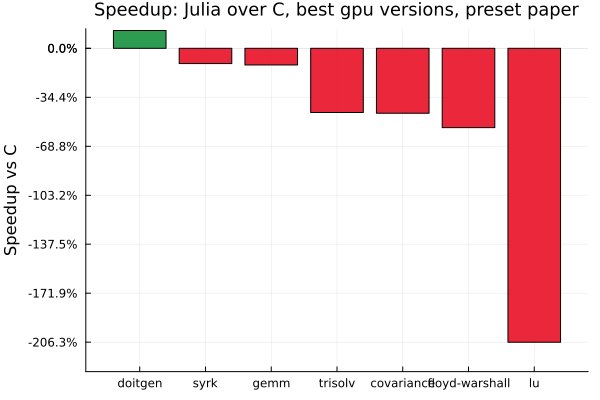
, 2023 code :: report Implemented and tuned kernels for a set of PolyBench-style benchmarks in both CUDA C and CUDA Julia, then measured where Julia's abstractions cost performance on GPU and where they don't. |
|
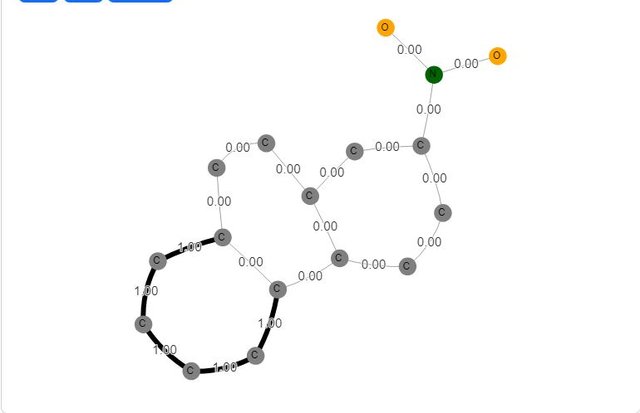
Interactive Visualizations of GNN Explainability Methods
, 2023 code :: report A React and Spark application for comparing Graph Neural Network explainability methods on a molecule toxicology dataset. Domain experts can interact with the molecule graph, reassign edge explanation weights by hand, and watch the resulting metrics recompute on the fly. |
|
Design and source code from Jon Barron's website |